
Red Light for Pain: 16 Trials Show When It Works for Neck, Knee

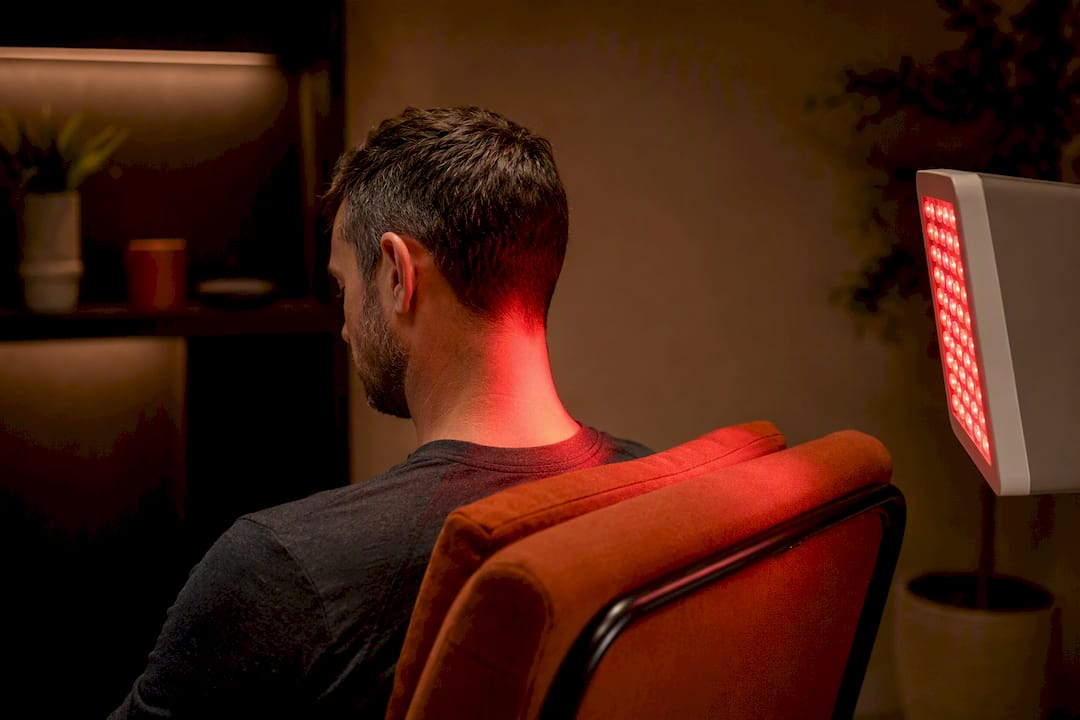
Yes, for some conditions, and the evidence is strongest for neck pain and properly dosed knee osteoarthritis. Results for low back pain, fibromyalgia, and neuropathic pain are promising but mixed across studies. Safety looks favorable overall, though treatment protocols still vary widely from clinic to clinic. If you’re in pain and considering this therapy, the right move is talking with a clinician who can build a plan around your specific condition, not a generic device setting.
TL;DR:
Red light therapy shows the strongest evidence for reducing neck pain and properly dosed knee osteoarthritis, with lasting relief seen in studies.
The effectiveness of treatment depends heavily on precise dosing, including wavelength, energy dose, session frequency, and treatment duration.
Safety is generally favorable, but active cancer, pregnancy, eye exposure, photosensitizing medications, and open skin conditions require medical consultation beforehand.
Home devices often deliver a lower energy dose than clinical devices, making them less likely to produce consistent results seen in studies.
Combining red light therapy with movement, manual therapy, or rehabilitation enhances its benefits and aligns with the best available research.
Table of Contents
How Red Light for Pain Works Inside Your Cells
The scientific name for red light therapy is photobiomodulation, or PBM, and it does not work the way a heating pad does. Heat treats surface discomfort. PBM works several layers deeper, targeting the machinery inside your cells that produces energy.
The primary target is an enzyme called cytochrome c oxidase, sitting inside the mitochondria of your cells. When red or near-infrared light photons hit this enzyme, they trigger a cascade that boosts adenosine triphosphate, or ATP, the molecule your cells burn as fuel. Cells running low on energy repair slower and inflame more. Cells with restored ATP output have more capacity to do repair work and calm inflammatory signaling.
There’s a second mechanism worth understanding: nitric oxide displacement. Nitric oxide can bind to cytochrome c oxidase and block it, essentially jamming the cellular engine. Red and near-infrared light knock that nitric oxide loose, freeing the enzyme to resume normal function and improving local blood flow in the process.
Research on cellular mechanisms backs this up directly. Mechanistic studies on photobiomodulation show PBM acting on cytochrome c oxidase and calcium ion channels, with downstream effects including higher ATP output, altered nitric oxide levels, and reduced inflammatory markers. A cell culture study on periodontal ligament stem cells found that red LED light at 650 nanometers, delivered at 6 J/cm², increased ATP production while lowering inflammatory cytokines IL-6 and IL-8. That’s a concrete demonstration that the anti-inflammatory effect isn’t theoretical.
Wavelength matters because it determines how far the light travels into tissue:
Red light (roughly 630 to 660 nanometers) penetrates shallower tissue, useful for surface joints and skin-adjacent structures.
Near-infrared light (roughly 800 to 905 nanometers) reaches deeper muscle, joint capsules, and some nerve tissue.
Both wavelengths follow a biphasic dose response, meaning there’s a sweet spot for energy delivered. Too little light does nothing measurable. Too much can actually suppress the cellular response instead of stimulating it.
That biphasic curve is the reason “more light, more relief” is a myth. Dosing precision matters as much as the light source itself.
What Does Clinical Research Say About Red Light Therapy for Pain?
Evidence quality varies sharply by condition, and lumping every use case together does the topic a disservice. Here’s where the research actually stands, condition by condition.
Neck pain has the strongest backing of any indication. A systematic review published in The Lancet pooled 16 randomized controlled trials covering 820 patients and found low-level laser therapy reduced acute neck pain immediately after treatment. For chronic neck pain, relief persisted for up to about 22 weeks in the pooled data. That’s not a single small study. It’s a meta-analysis spanning multiple trials and hundreds of patients, which is why neck pain sits at the top of the evidence hierarchy for red light therapy for pain.
Knee osteoarthritis shows real benefit, but the outcome depends heavily on dosing. Trials that followed recommended energy parameters, generally in the range associated with professional dosing guidelines, reported meaningful pain reduction and improved function scores. Trials that under-dosed the joint, using too little energy or too short a session, tended to show weaker or null results. This is the clearest example in the literature of why “red light therapy doesn’t work” and “red light therapy works well” can both be technically true depending on how it was delivered.
Low back pain evidence is more of a mixed bag. Some randomized trials report solid improvement in pain scores and function; others show no meaningful difference from sham treatment. A broader review of photobiomodulation for musculoskeletal pain attributes much of this inconsistency to protocol heterogeneity rather than the therapy itself being ineffective. Wavelength, energy dose, treatment area, and session frequency differed enough between studies that comparing them directly is genuinely difficult. Until researchers standardize these variables, low back pain will likely stay in the “promising but unproven” category.
Fibromyalgia and neuropathic pain are the newest frontier. Encouraging results have emerged from smaller trials. A synthesis of PBM randomized trials conducted through 2025 found meaningful pain reductions in several fibromyalgia and neuropathic pain studies, using devices ranging from 660 to 850 nanometers with widely varying session schedules. The catch is sample size. These trials tend to run smaller than the neck pain or knee osteoarthritis studies, and researchers agree that larger multicenter trials are needed before fibromyalgia protocols can be considered settled science.
One newer study illustrates both the promise and the limits of current research well. A 2026 double-blind, randomized, multicenter trial testing a combined 660 nanometer and 850 nanometer LED device found short-term reductions in musculoskeletal pain compared with a sham device, measured at 30 minutes post-treatment, along with lower relapse rates within 24 hours. That’s a genuinely well-designed study. But it tested a single 30-minute session, which limits how much you can generalize its findings to long-term chronic pain management.
The thread running through all of this: red light therapy for inflammation and pain is not a single, uniform treatment. It’s a family of protocols, and the protocol determines the outcome as much as the underlying biology does.
The bottom line on evidence strength: Neck pain and properly dosed knee osteoarthritis have the most consistent trial support. Low back pain, fibromyalgia, and neuropathic pain show real signal in smaller or more heterogeneous trials, meaning the direction of the evidence looks favorable, but the studies aren’t yet large or standardized enough to write a universal dosing guideline.
What Wavelength and Dose Actually Matter for Pain Relief?
Trial protocols vary, but there are patterns worth knowing before you try any device, whether it’s in a clinic or on your countertop.
Wavelength range. Most trials that showed benefit used red light in the 630 to 660 nanometer range, near-infrared light in the 800 to 905 nanometer range, or a combination of both. Devices outside these ranges have far less trial evidence behind them.
Energy dose (J/cm²). This is the single most important number in the entire field, and it’s the one most home shoppers never check. Trials showing benefit for joints like the knee typically delivered doses aligned with published professional guidelines, often in ranges that consumer devices struggle to reach in a reasonable session length.
Session frequency. Some chronic pain protocols call for near-daily treatment, not because damage requires it, but because analgesic effects from PBM can be temporary. Peripheral nerve tissue and cellular response cycles mean a single session’s benefit can fade, and repeated dosing sustains the effect over weeks.
Cumulative treatment period. Studies showing durable relief, particularly the 22-week outcomes in the neck pain meta-analysis, generally involved a course of multiple sessions over several weeks, not a single visit.
Device specs are where good intentions run into physics. Power output, spot size, and distance from skin all change the actual dose delivered, even if two devices claim the same wavelength.
Pro Tip: Before trusting a device’s marketing claims, ask for its irradiance rating in mW/cm² and treatment time. Multiply the two together and divide by 1,000 to estimate the J/cm² delivered. If a company can’t or won’t give you that number, that’s a red flag about whether it can hit therapeutic dosing.
This is also why home devices often underdeliver compared to trial results. Many consumer products are built for convenience and price point, not for matching the energy density used in the studies that produced the good outcomes.
Is Red Light Therapy Safe? Risks and Who Should Avoid It
The safety data is genuinely reassuring. Reviews spanning multiple randomized controlled trials report a low incidence of serious adverse events, which is part of why this therapy has spread so widely in physical medicine settings. That does not mean it’s appropriate for everyone in every situation.
A few groups need to have a direct conversation with a provider before starting treatment:
Active cancer at the treatment site. Because PBM stimulates cellular activity and blood flow, treating tissue with active malignancy is generally avoided until a clinician clears it.
Pregnancy. Providers typically avoid direct treatment over the pelvic or abdominal area during pregnancy as a precaution, even though systemic risk data is limited.
Eye exposure. Direct eye exposure to therapeutic light, especially near-infrared wavelengths you can’t see well, requires protective eyewear during treatment. This is standard practice in any properly run clinic.
Photosensitizing medications. Certain antibiotics, acne medications, and other drugs increase skin sensitivity to light. Mention your full medication list before your first session.
Active skin conditions or open wounds near the treatment area. These should be flagged and reviewed rather than treated by default.
If you notice unusual redness, warmth, or discomfort after a session that doesn’t resolve within a day, stop treatment and tell your provider. That kind of reaction is uncommon in the research record, but reporting it lets your clinician adjust dose, distance, or treatment area rather than guessing.
Clinic Treatment vs. Home Devices: What Should You Expect?
Where you get treated changes what you can realistically expect from it, and this distinction gets glossed over in a lot of consumer marketing.
Clinic-grade equipment typically offers calibrated output you can trust matches what’s on the label, trained staff who can adjust distance and time to hit an actual therapeutic dose, and consistency across sessions. A trained provider can also track your progress using standardized pain scales and function measures, so you know objectively whether the treatment is working rather than guessing based on how you feel that day.
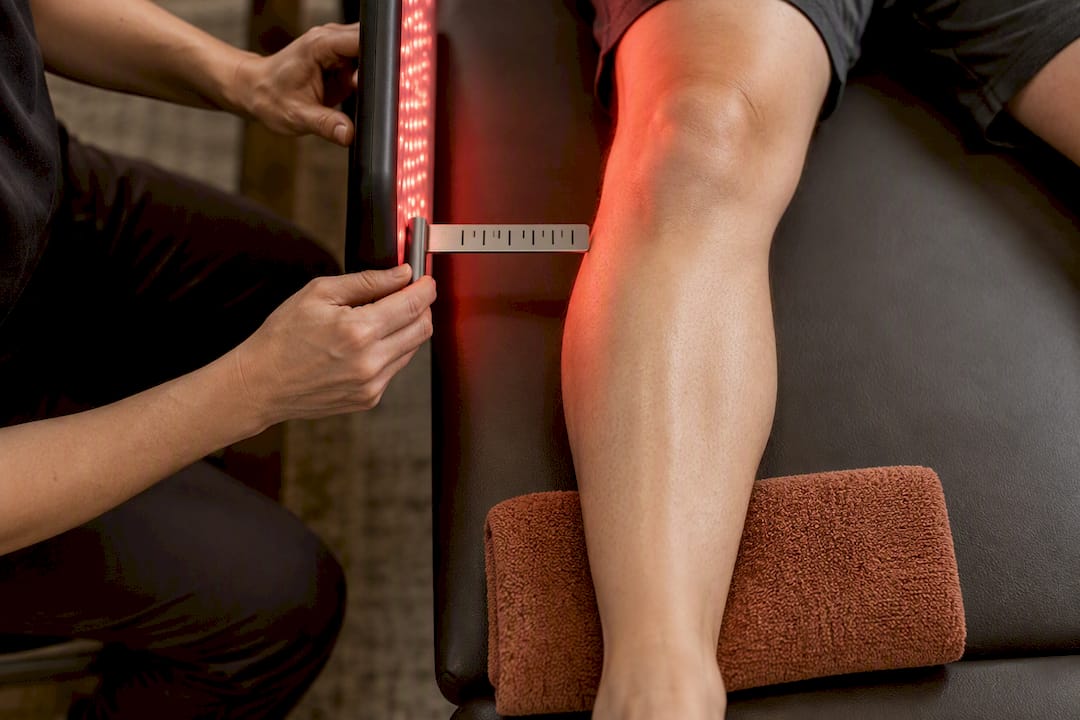
Home devices win on convenience. You can use them on your own schedule without leaving the house. The tradeoff is usually irradiance. Many consumer units simply can’t produce the energy density used in clinical trials within a practical session length, which means you may be getting a fraction of the dose that produced results in the research.
A typical clinic session for pain follows a fairly consistent workflow: a brief assessment of the target area, positioning the device at the correct distance, a timed exposure calibrated to the tissue depth and condition being treated, and documentation of your pain level before and after using a standardized scale. Follow-up sessions track that same measure over time so you and your provider can see the trend line, not just a single data point.
Give any course of PBM treatment a fair trial before judging results, generally several sessions over a few weeks rather than one visit.
Expect a clinician to combine it with other modalities rather than relying on light alone for a chronic condition.
Ask how progress will be measured so you’re not relying on subjective impression months in.
Pro Tip: If you’ve tried a home device for a few weeks with no change, that doesn’t necessarily mean red light therapy doesn’t work for you. It may mean the device never delivered a dose close to what the research used. A clinical evaluation can clarify which explanation is true.
How Does Red Light Therapy Fit Into a Complete Pain Care Plan?
Photobiomodulation works best as a member of a team, not a solo act. The randomized trials that produced the strongest outcomes, including the neck pain meta-analysis and the knee osteoarthritis studies, typically embedded light therapy within a broader care approach involving movement, manual treatment, or structured rehabilitation. Treating PBM as a standalone cure sets up unrealistic expectations that the therapy itself was never designed to meet.
If you’re evaluating a provider for red light therapy for pain relief, a short list of questions will tell you a lot:
What specific area are we targeting, and why does that location matter for my condition?
What wavelength and dose will the device deliver, and how does that compare to the ranges used in published research?
How many sessions do you expect before we’ll know if this is helping?
What outcome measures will we track, such as a pain scale or a function test, and how often?
Are there safety checks specific to my health history I should know about before we start?
A provider who can answer these clearly, rather than making a blanket claim that light therapy fixes everything, is one who understands the evidence base rather than just the marketing around it.
At Compassion Chiropractic, red light therapy is offered as one piece of a broader toolkit that includes chiropractic adjustments, neuromuscular rehabilitation, electrotherapy, and other modalities, reflecting the same multimodal approach the research supports. Whether in-clinic PBM or a home device makes more sense for you often comes down to how quickly you need measurable progress and whether you value having a trained hand adjusting your dose along the way.
Where the Conventional Advice on Red Light Therapy Falls Short
The biggest gap in most consumer coverage of red light therapy for pain is treating it as one thing. It isn’t. A 660 nanometer panel delivering a fraction of a joule per square centimeter for five minutes and a clinic-grade near-infrared device delivering a calibrated therapeutic dose over a full course of sessions are, functionally, two different interventions wearing the same marketing label. Reviewers and skeptics who dismiss “red light therapy” wholesale are often reacting to underpowered consumer products, not the therapy the neck pain and knee osteoarthritis trials actually tested.
What gets underrated is dosing literacy. Most people shopping for relief compare price and wattage, not J/cm² delivered to tissue depth. That’s backwards. The research is clear that dose, not brand name, drives outcome.
My honest read: start with the conditions where evidence is strongest, neck pain and knee osteoarthritis, and treat this as an adjunct to movement-based care, not a replacement for it. Ask your provider to show you the numbers behind your treatment plan. If they can’t, that tells you something.
— James
Getting Red Light Therapy at Compassion Chiropractic
Compassion Chiropractic built its practice around a simple idea: cost should never be the reason someone goes without care that could help them move and feel better. Red light therapy is offered as one piece of a personalized plan alongside chiropractic adjustments, neuromuscular rehabilitation, and other therapies, delivered by people who take the time to understand what’s actually going on with your pain.

Walk-in visits mean you don’t have to wait weeks for an opening just to get evaluated. A first session typically starts with an assessment of your pain and mobility so your provider can decide whether red light therapy, adjustments, or a combination makes sense for your situation, and track your progress from there. If cost has held you back from seeking care before, the clinic offers a donation-based option so cost is not necessarily a barrier to receiving treatment.
If you’re ready to find out whether red light therapy for pain fits your recovery plan, book your visit online and take the first concrete step toward a plan built around you.
This article is general information, not a substitute for advice from a qualified doctor. Consult a qualified healthcare professional about your own circumstances before acting on anything here.
Sources
FAQ
Does Red Light Really Help With Pain?
Yes, for several conditions, particularly neck pain and knee osteoarthritis when dosed properly. A pooled analysis of 16 randomized trials found chronic neck pain relief lasting up to 22 weeks, while evidence for low back pain, fibromyalgia, and neuropathic pain remains promising but less consistent.
Why Don’t Doctors Recommend Red Light Therapy More Often?
Many providers are cautious because dosing protocols vary so widely across studies, making it hard to write a single standardized recommendation. Reviews note that protocol heterogeneity, meaning differences in wavelength, dose, and session frequency, is the main barrier to broader clinical guidelines, not a lack of biological plausibility.
What Are the Negative Effects of Red Light Therapy?
Serious adverse events are uncommon in the research record, and major reviews describe a generally favorable safety profile. Mild, temporary skin warmth or redness can occur, and eye protection is required since direct exposure to therapeutic wavelengths can be uncomfortable or harmful.
What Does the Research Say About Red Light Therapy Compared to Other Pain Treatments?
Research treats red light therapy as an adjunct rather than a standalone fix, most effective when combined with exercise, manual therapy, or rehabilitation. That’s the same multimodal approach used in the strongest clinical trials and the same philosophy behind the range of therapies offered at Compassion Chiropractic.
How Much Does Red Light Therapy Cost?
Pricing for red light therapy at Compassion Chiropractic is available directly through the clinic rather than published as a flat rate, since treatment is often part of an individualized care plan. You can book online to get current details for your specific needs.
Recommended
Comments