
Why X Rays Often Miss Rib Subluxation Symptoms

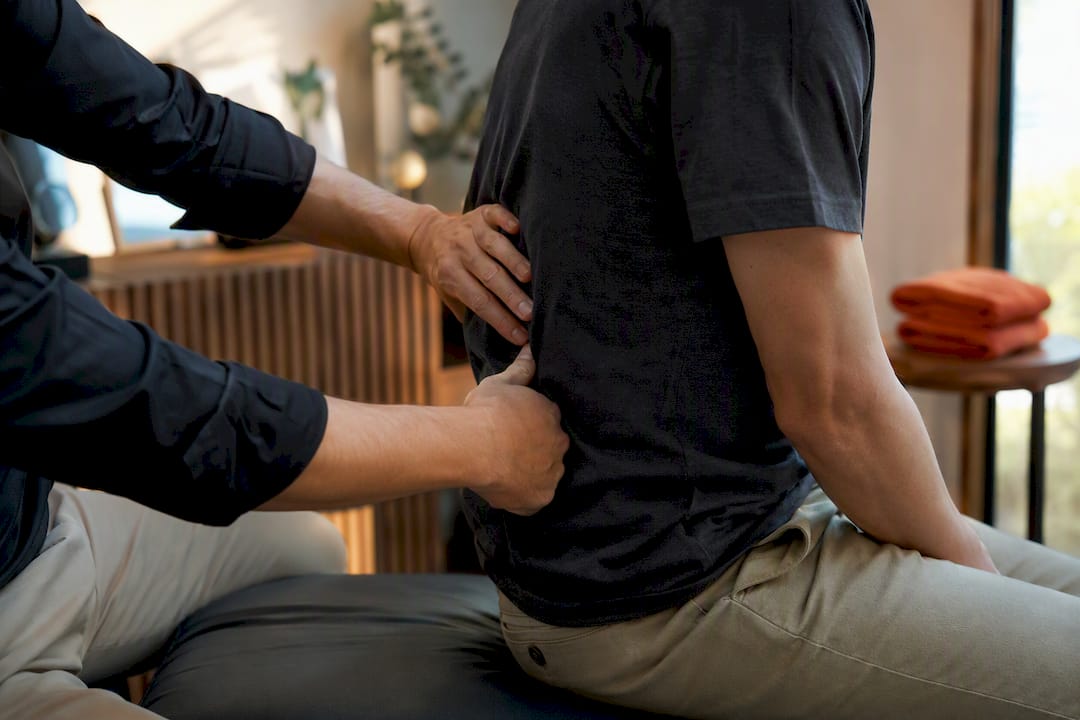
Rib subluxation causes a sudden, sharp, often stabbing pain along the lower ribs or upper abdomen, frequently paired with an audible or felt click as the rib shifts. It gets worse with deep breaths, coughing, sneezing, or twisting, and usually stays on one side. If that pain comes with shortness of breath, chest pressure, or pain spreading to your arm or jaw, treat it as an emergency and seek care right away, since diagnosis of true rib subluxation is clinical and sometimes needs a provider’s exam or ultrasound to confirm.
TL;DR:
Most cases involve episodic, sharp pain triggered by breathing, coughing, or twisting, often with a clicking sensation that can help confirm diagnosis.
Diagnosis relies mainly on physical exam maneuvers and dynamic ultrasound, as bone X-rays usually show no abnormal findings.
Conditions like fractures, costochondritis, or cardiac issues can mimic rib subluxation, so timing, associated systemic symptoms, and specific pain triggers are crucial for accurate diagnosis.
Conservative treatment, including rest, activity modification, NSAIDs, and manual therapy, typically resolves symptoms within weeks to a few months, with surgery reserved for persistent cases.
Proper pacing during recovery and focusing on the hooking maneuver are key to avoiding recurrent pain and improving diagnostic clarity without over-reliance on imaging.
Table of Contents
What Rib Subluxation Symptoms Actually Feel Like
We hear the same story from people all the time: a sudden, knife-like pain under the ribs, then a strange clicking sensation, then relief that turns into a dull, nagging ache. That pattern isn’t random. It’s the signature of what clinicians call slipping rib syndrome, where cartilage connecting a lower rib to the breastbone loosens enough to let the rib slide out of place.
The initial jolt tends to fade into something duller within minutes, but the ache can linger for days if the rib stays irritated. According to Cleveland Clinic, the pain is sudden and sharp, often radiating toward the back, and it commonly comes with an audible or palpable clicking or popping sensation during movement.
Certain everyday movements almost reliably bring the pain back:
Taking a deep breath, especially a sudden or forced one
Coughing, sneezing, or laughing hard
Twisting your torso or reaching overhead
Lifting something, even something light, with an awkward posture
These triggers show up consistently because they all stretch or compress the same unstable joint between rib and cartilage, according to Cleveland Clinic’s symptom overview.
Pro Tip: Press gently along the lower edge of your rib cage where the pain starts. If you find one tender spot that reproduces the clicking sensation, that detail alone can help your provider narrow down the diagnosis faster.
Most people describe the pain as one-sided, and it often radiates into the upper abdomen, flank, or upper back rather than staying confined to the chest wall. The pattern is episodic rather than constant: flare, ease, flare again, often tied directly to how you’re moving or breathing that day. At rest, many people feel almost nothing, which can make the condition feel confusing or even imagined until the next cough sets it off again.
What Causes Rib Subluxation and Who Gets It?
The mechanics behind this are simpler than the pain suggests. The cartilage connecting your ribs to the breastbone, or the ligaments holding one rib to the next, loosen or tear slightly. That lets the rib move more than it should, and the excess motion irritates the intercostal nerves running along the rib’s underside, which is part of why the pain can radiate well beyond the chest wall according to a comprehensive review of slipping rib syndrome.
Several factors raise your risk:
Direct trauma, like a blow to the chest during a fall, sport, or car accident
Indirect trauma, including violent coughing fits, forceful vomiting, or heavy repetitive breathing
Repetitive strain from sports involving twisting or overhead reaching, or from long stretches of poor posture
Connective tissue hypermobility, including Ehlers-Danlos syndrome or general joint laxity
Degenerative changes in the cartilage that come with age or prior chest injuries
One detail surprises a lot of patients: this isn’t strictly an older person’s problem. A PMC review of slipping rib syndrome found the mean age at diagnosis is 19, with most patients under 40, and some literature points to a higher rate among women. If you’ve had a prior rib injury or a history of repeated hard coughing spells, your risk of a recurrence climbs noticeably.
How Do Doctors Diagnose Rib Subluxation?
Standard chest X-rays usually come back normal here, which frustrates a lot of patients who expect imaging to confirm what they’re feeling. Rib subluxation involves cartilage and ligament movement, not bone damage, so it rarely shows up on a static image taken while you’re lying still.
Diagnosis instead relies mostly on your history and a physical exam that reproduces the pain. Here’s what that process typically looks like:
The clinical interview. Your provider asks about the onset, what movements trigger it, and whether you’ve noticed clicking or popping.
The hooking maneuver. The clinician hooks their fingers under your lower rib margin and pulls gently forward. Reproducing your pain, or eliciting a click, is one of the strongest clinical signs of rib subluxation, even though the maneuver itself is uncomfortable, per Cleveland Clinic.
Dynamic ultrasound. Rather than a static scan, the provider watches the rib in real time during provocative movement. Some studies report sensitivity as high as 87 to 89% when ultrasound is paired with these active maneuvers, according to the PMC diagnostic review.
Intercostal nerve block. An injection of local anesthetic near the affected rib serves double duty. If it relieves your pain, that confirms the diagnosis while also easing the flare.
Imaging to rule out other causes. X-rays or CT scans still matter if there’s any suspicion of a fracture or another structural problem.
Pro Tip: Before your visit, write down exactly which movements bring the pain on and whether you’ve heard or felt any clicking. That single detail often shortens the whole diagnostic process.
Could It Be Something Other Than a Slipped Rib?
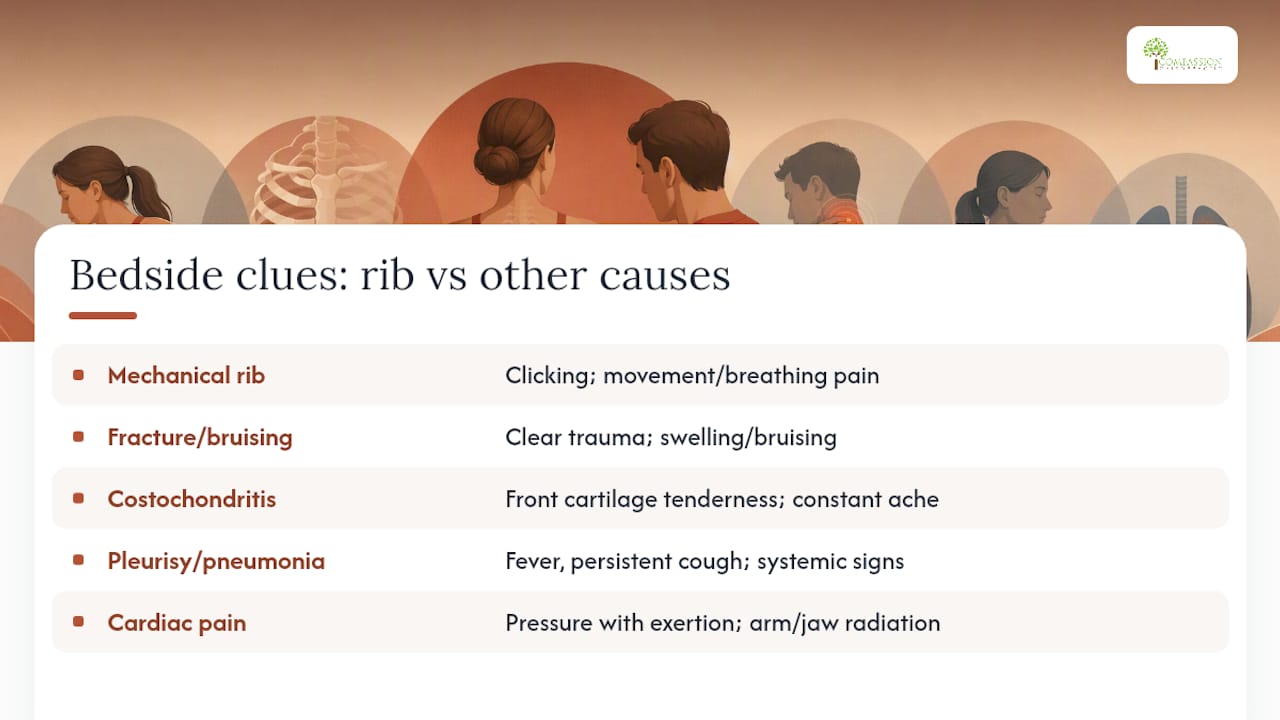
Chest wall pain gets misread constantly, and that’s part of why slipping rib syndrome is frequently under-diagnosed, per MedlinePlus. Several conditions overlap closely enough with rib subluxation symptoms to cause real confusion.
Rib fracture or bruised rib usually follows a clear traumatic event and comes with visible swelling or bruising, plus positive findings on imaging. According to the NHS, fractures typically cause severe pain with every breath and movement, without the intermittent clicking pattern that marks a subluxation.
Costochondritis produces tenderness across the front of the chest wall at the cartilage joints, but it lacks the clicking or popping sensation and tends to feel more like a constant ache than a sudden jolt.
Pleurisy or pneumonia bring fever, persistent cough, and other systemic signs that a mechanical rib problem simply doesn’t cause.
Cardiac pain is the one you can’t afford to misjudge. Pressure or squeezing chest pain that worsens with exertion and radiates to the arm or jaw needs emergency evaluation immediately, not a wait-and-see approach.
A useful bedside clue: if pressing or hooking under the rib margin reproduces your exact pain, that favors a mechanical rib issue. If you have fever, abnormal vital signs, or pain that shows up during exertion rather than with movement or breathing, that points elsewhere and needs urgent evaluation.
Treating Rib Subluxation: From Rest to Surgery
Most cases start with conservative care, and most people get real relief from it. A comprehensive treatment review outlines a fairly consistent escalation path.
Rest and activity modification. Avoid the specific movements that trigger your pain, whether that’s twisting, reaching overhead, or heavy lifting.
Positioning. Many people find relief lying on the unaffected side or supporting the ribs with a pillow while coughing or sneezing.
Ice or heat. Ice calms acute flares; heat helps once the sharp pain has settled into a dull ache.
Over-the-counter NSAIDs. These can reduce pain and inflammation, but talk to your provider first if you have kidney issues, ulcers, or take blood thinners.
Physical therapy and manual therapy. Targeted work to restore rib mobility and improve thoracic mechanics helps many patients avoid recurrence, and this is where hands-on care through chiropractic adjustment sessions often fits into the recovery plan.
Intercostal nerve block or steroid injection. These serve as both diagnosis and treatment when conservative steps aren’t enough.
Surgical resection. Removing the unstable cartilage or rib segment is reserved for cases that keep recurring despite everything else, and it’s typically effective when it’s genuinely needed.
Pro Tip: Pace your return to activity in small steps rather than jumping back to full intensity. A flare that returns after you feel “better” usually means you pushed the timeline, not that the treatment failed.
If pain worsens instead of easing, or new symptoms like fever or breathing difficulty appear, that’s your signal to get re-evaluated promptly rather than waiting it out.
How Long Does Recovery From Rib Subluxation Take?
Mild cases often settle within days to a few weeks with rest, activity changes, and basic pain control. Cases that need physical therapy or a diagnostic injection typically take weeks to a few months before the rib stabilizes and the clicking stops for good.
Surgery is uncommon, reserved for people whose pain keeps recurring despite conservative treatment, but outcomes tend to be favorable when it’s genuinely warranted, according to the surgical management literature. If you’re weeks into conservative care without meaningful improvement, that’s the point to ask about a specialist referral rather than continuing to wait it out on your own.
A Clinic’s View on Rebuilding Rib and Rib Cage Mobility
Since 2009, some chiropractic clinics have approached rib and chest wall pain by assessing first, then rebuilding function through hands-on care. Often, treatment includes manual adjustments, rehab exercises, and adjunct therapies like ultrasound therapy to support recovery.
Some clinics offer walk-in models to reduce wait times for appointments. That said, if you have chest pressure, shortness of breath, or pain radiating to your arm or jaw, go to an emergency room first. For other cases, you can often book online or walk in to have a mobility plan developed tailored to your needs.
The Overlooked Truth About Rib Pain Diagnosis
Here’s what most patient guides skip: the reason rib subluxation frustrates people isn’t the pain itself, it’s the gap between how real the pain feels and how normal every scan looks. That mismatch sends people down a diagnostic rabbit hole of cardiac workups and GI referrals before anyone tries the one test that actually works, which is pressing on the rib and asking, “Does this reproduce it?”
I’d argue the hooking maneuver deserves far more attention than it gets in patient education. It costs nothing, takes thirty seconds, and it’s more diagnostically useful for this specific condition than a chest X-ray. The dynamic ultrasound data backs that up. Sensitivity climbing toward 87 to 89% when the rib is imaged 89% during active movement, rather than sitting still, tells you the whole diagnostic model for chest wall pain needs to catch up to how the body actually misbehaves.
The other underrated piece is pacing. Patients who treat the first pain-free day as a green light to resume full activity are the ones who end up back at square one. Recovery from rib subluxation isn’t linear, and expecting it to be is where a lot of frustration starts.
— James
This article is general information, not a substitute for advice from a qualified doctor. Consult a qualified healthcare professional about your own circumstances before acting on anything here.
Sources
Recommended
Comments