
Sleep Better in 2–4 Weeks: Pillow First Positions for Back Pain

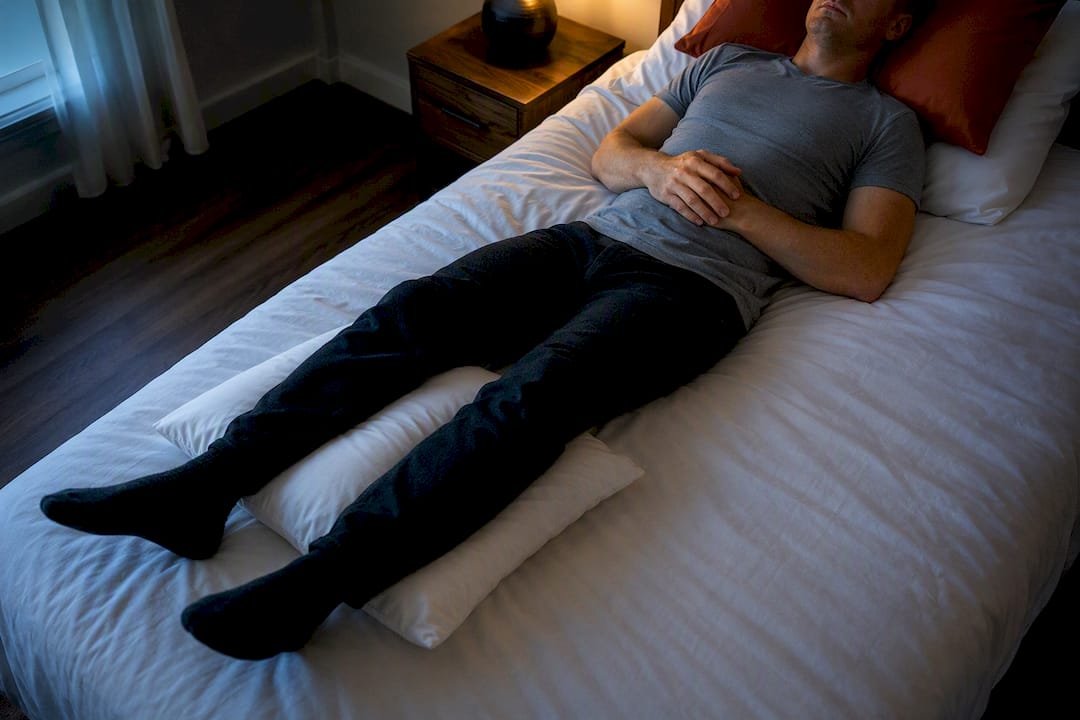
If you’re dealing with back pain, side sleeping with a pillow between your knees is usually your best bet, since it keeps your hips and spine in a neutral line. Back sleeping with a pillow tucked under your knees comes in a close second, especially if a rolled towel supports your lower back. Stomach sleeping is the position to avoid, but if you can’t give it up, sliding a thin pillow under your pelvis limits the strain.
TL;DR:
Sleeping on your back with a pillow under your knees is supported by evidence as the best position to reduce back pain for many individuals.
Using a firm pillow between the knees during side sleeping helps maintain proper spinal alignment and prevents pelvis twisting.
Medium-firm mattresses are generally recommended to support spinal health, with sagging or uneven surfaces contributing to pain.
Adjusting your pre-sleep routine, including heat, mobility exercises, and pillow placement, can significantly ease transitioning to new sleep positions.
Progressive practice over two to four weeks is necessary to adapt to new setups, with attention to pillow firmness and positioning being critical for success.
Table of Contents
Sleeping Positions Back Pain Sufferers Should Know
Your spine has a natural curve, and every sleeping position either respects that curve or fights it all night long. A 2025 systematic review covering studies from 2005 through 2024 found that supine sleep, meaning flat on your back, correlates with a lower prevalence of low back pain, while prone sleep, lying on your stomach, is tied to more lumbar strain. That’s a meaningful data point if you’ve been told “just find what’s comfortable” without any real guidance.
Side sleeping tends to work well because it lets your hips and lower spine settle into a straighter line than back or stomach positions typically allow. There’s a real difference between a tight fetal curl and a more open, neutral side position. Curling too tightly can round your lower back and add tension to the discs; keeping your knees only slightly bent, with your body more elongated, tends to feel better over a full night.
Here’s how to set up side sleeping correctly:
Place a firm pillow between your knees so your top leg doesn’t drop forward and twist your pelvis.
Keep a thin pillow or rolled towel under your waist if there’s a gap between your ribs and the mattress.
Try a body pillow if you tend to roll onto your stomach during the night. It gives your arms and top leg something to rest on besides the mattress.
Back sleeping is the second-strongest option, and Mayo Clinic specifically recommends placing a pillow under your knees to help maintain your lumbar curve. Cleveland Clinic echoes this, suggesting a small pillow or rolled towel under the knees to keep your lower back from arching. If flat feels stiff, a slightly reclined position, using an adjustable base or a wedge, can take pressure off the lower spine entirely.
Stomach sleeping flattens the natural curve of your lower back and forces your neck to twist to one side for hours. If you truly can’t retrain yourself out of it, a thin pillow under your pelvis reduces some of that arch, but treat this as damage control, not a real fix.
Choosing Pillows That Actually Hold Your Alignment
The right pillow setup does more work than most people realize, and the wrong one quietly undoes everything else you’re trying to fix. A pillow that’s too soft or too tall throws off the neat alignment you worked to create, which is why contoured or firmer pillows often outperform the fluffy ones most people default to.
For your neck, loft matters based on position. Side sleepers generally need a medium to high loft pillow, often contoured, to fill the gap between the shoulder and the head. Back sleepers need something flatter so the neck doesn’t get pushed forward into a forward-tilted posture.
Knee pillows should be firm enough to hold their shape all night. A soft one flattens under pressure and stops doing its job by 2 a.m.
Body pillows work well for side sleepers who tend to roll, giving the top arm and leg a place to rest instead of pulling the spine out of line.
A rolled towel under the lower back works as a low-cost lumbar support if you don’t want to buy a dedicated cushion.
Pro Tip: Measure your shoulder width before buying a neck pillow. A pillow matched to your shoulder, not just labeled “firm” or “soft,” holds cervical alignment far more consistently than a generic one.
Does Your Mattress Make Back Pain Worse?
A sagging or overly soft mattress can undo good pillow placement fast. Research on mattress firmness and sleep health generally points to medium-firm mattresses as the sweet spot for adults with chronic low back pain, since they offer enough support to keep the spine level without creating pressure points at the hips and shoulders. Side sleepers sometimes need a touch more give at those pressure points, so “medium-firm” isn’t a rigid rule for everyone.
A few signs your mattress is working against you:
Visible sagging or a body-shaped dip where you usually sleep.
Waking up more sore than when you went to bed, even after a full night’s rest.
Rolling toward the middle of the bed without meaning to.
A mattress topper can buy you time, but it’s a patch, not a repair, once a mattress is truly worn out. If replacing the mattress isn’t in the budget right now, a wedge pillow or an adjustable base is a reasonable middle step, and it can also make reclined back sleeping more comfortable if flat positions still bother you.
Getting Your Body Ready for a New Sleep Position
Switching positions after years of sleeping one way takes some prep, not just willpower. A short pre-bed routine lowers muscle guarding, the tensing your body does automatically around a sore area, and makes the new position easier to hold through the night.
Spend 15 to 20 minutes with heat on tight muscles or cold on an irritated area, whichever feels better to you, before you get into bed.
Run through two or three gentle mobility moves or a short breathing exercise to help your body relax instead of bracing.
Set up your pillows exactly where you want them, then lie in the new position for a few minutes while you’re still awake, so your body has a preview before it’s asleep and can’t adjust anymore.
A cold plunge or targeted cryotherapy session earlier in the evening can also help take the edge off inflammation before you start this routine, and cold-based recovery methods work on a similar principle when it comes to calming tissue before rest.
When Positional Fixes Aren’t Enough
Give a new setup two to four weeks before deciding it isn’t working, since your body needs time to adjust to unfamiliar pressure points and muscle patterns. That window shortens fast if something feels wrong beyond ordinary stiffness.
Watch for progressive numbness, weakness in a leg or foot, changes in bowel or bladder control, or pain so severe it wakes you repeatedly through the night. None of those improve with a better pillow, and all of them deserve a same-week evaluation, not a wait-and-see approach.
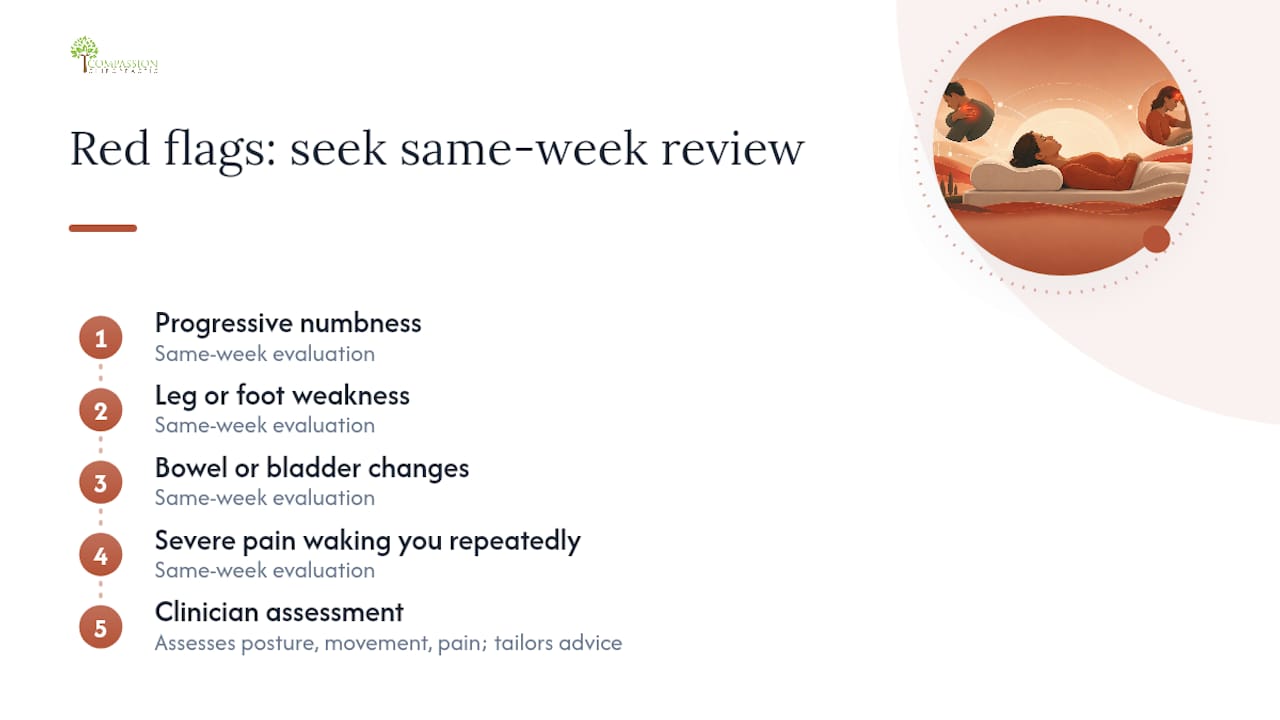
A clinician assessing back pain typically looks at your posture, movement patterns, and where exactly the pain sits, then tailors sleep-support recommendations to what they find rather than handing you generic advice.
How Compassion Chiropractic Approaches Sleep-Related Back Pain
Founded with the idea that people in pain shouldn’t have to wait weeks for help, the practice built a walk-in model. That matters especially for sleep-related back pain, where the right adjustment paired with the right at-home setup often makes the biggest difference.
A patient’s sleep posture rarely improves from advice alone. It improves when someone assesses how that patient’s spine actually moves, then matches pillow height, mattress firmness, and position recommendations to that specific body.
During an assessment, the team looks at alignment, mobility, and where pain concentrates, then offers pillow and mattress guidance tailored to the findings. For patients working through disc issues or sciatica, that guidance often includes progressive positioning practice, similar to the gradual approach described above, to ease the transition. A short in-clinic visit can help reduce trial and error compared to trying adjustments alone at home.
Why Most Sleep-Position Advice Falls Short
Most articles on this topic hand you a diagram and call it done. The real problem is rarely “which position is best” in the abstract. It’s that people try to force themselves into a textbook position overnight, sleep terribly for a week, and give up before their body adjusts.
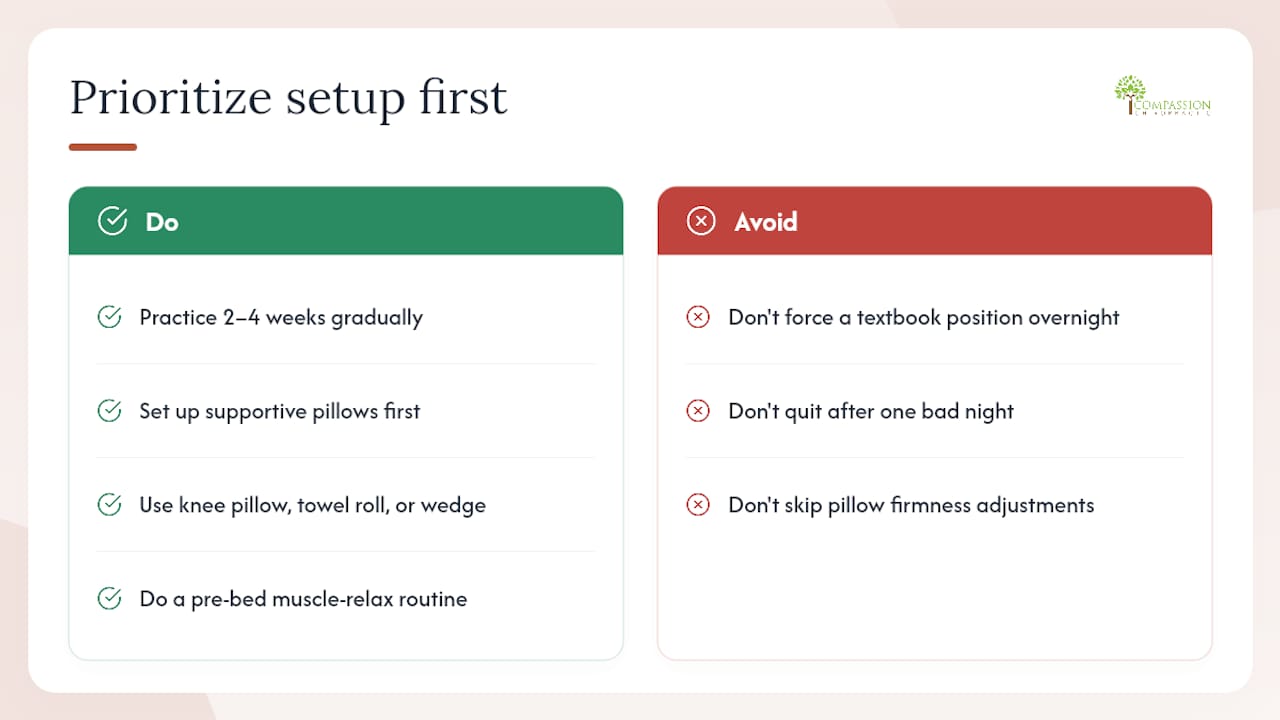
The systematic review data backing supine and supportive side positions is solid, but it means little without the transition plan to get there. That’s the piece conventional advice skips: the two to four weeks of gradual practice, the pillow firmness details, the pre-bed routine that lowers muscle guarding enough to actually hold a new position.
If you take one thing from this guide, prioritize the setup over the willpower. Get the knee pillow, the towel roll, or the wedge in place before you decide your new position “doesn’t work.” Most people quit on a good position because of a bad pillow, not because the position itself was wrong.
— James
This article is general information, not a substitute for advice from a qualified doctor. Consult a qualified healthcare professional about your own circumstances before acting on anything here.
Sources
Recommended
Comments