
3 Quick Spinal Mobility Exercises That Prevent Lower Back Compensation

Start with daily micro-doses of three region-targeted drills: cervical chin tucks, thoracic foam-roll extensions, and pelvic tilts. Practiced consistently, they build spinal mobility within weeks without straining the lower back. Move slowly, stay pain-free, and read the safety cues below before adding rotation work.
TL;DR:
Consistent micro-doses of targeted spinal exercises over weeks improve mobility and can reduce stiffness without causing back strain, especially with proper control.
Perform cervical drills such as chin tucks and head turns carefully, stopping immediately if sharp nerve pain occurs, and track progress with baseline measures like wall contact.
Focus on thoracic extension and rotation movements, particularly foam-roller and wall-supported stretches, to relieve upper back stiffness that often causes lower back discomfort.
Lumbar mobility should include pelvic tilts and bridging exercises to build stability, while avoiding unsupported rotation if disc issues are suspected.
If mobility plateaus after several weeks of diligent practice, or symptoms worsen, seek professional assessment for manual therapy or adjustments rather than relying on self-stretching alone.
Table of Contents
How Do You Know You’re Moving Safely?
Stiffness feels like resistance. Pain feels like a warning. Learn that difference before you do anything else, because pushing through the wrong kind of discomfort is how a simple stretching habit turns into a setback.
Stop and see a clinician if you notice numbness, tingling that runs down an arm or leg, progressive weakness, or pain that worsens instead of easing after a few sessions. Those are not “work through it” signals. Everything else, mild tightness, a pulling sensation, a little soreness the next day, is normal territory for mobility work.
Breathe out as you move into a stretch or rotation. Exhaling relaxes the rib cage and the muscles around your spine, which is part of why structured spine-mobility guides that separate the cervical, thoracic, and lumbar regions tend to outperform generic “back stretches.” Keep your shoulder blades gently set, not shrugged, and think about moving from the ribs rather than the hips.
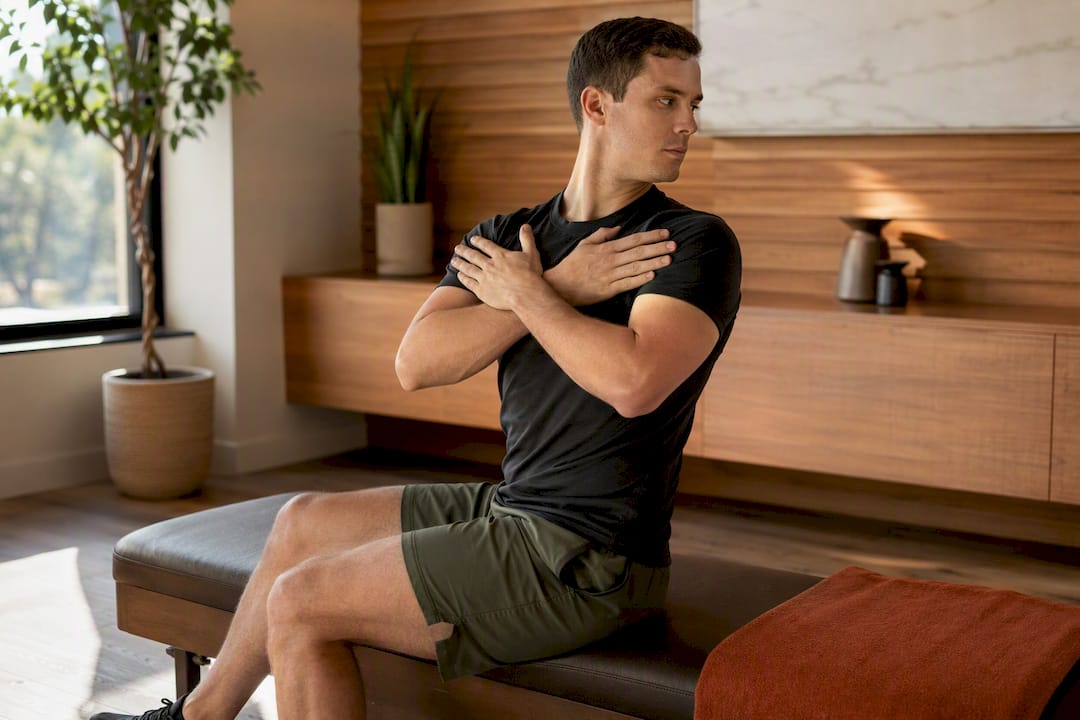
A quick self-test: sit tall, cross your arms over your chest, and rotate your torso side to side without letting your hips turn. If your hips swing along with your shoulders, your thoracic spine isn’t doing the work, your lower back is compensating. That’s the pattern every drill below is designed to correct.
Regress any move by doing it seated or against a wall for support. Progress by adding a foam roller or standing unsupported once control feels solid.
What you’ll need:
A yoga mat or firm, flat surface
A foam roller (medium density is fine to start)
A sturdy chair without wheels
A wall with clear space in front of it
Pro Tip: Set a timer for two minutes every hour at your desk. Small, frequent doses of movement beat one long session, since short mobility breaks spread through the day prevent stiffness from building up in the first place.
Which Cervical Drills Improve Neck Mobility Safely?
Your neck carries the weight of a bowling ball, roughly, all day. These five moves restore range without provoking nerve irritation, as long as you keep your thoracic spine neutral and never force the end range.
Chin tucks. Sit tall, draw your chin straight back like you’re making a double chin, hold two seconds, release. Do several reps. This is the single best corrective for forward head posture.
Slow head turns. Rotate your head to look over one shoulder, only as far as feels smooth, hold three seconds, return to center. several reps per side.
Gentle nods. Nod your head forward and back in a small range, like answering “yes” softly. several slow reps to warm up the upper joints.
Head glides. Keeping your chin level, slide your head straight forward, then straight back, without tilting. several reps.
Lateral flexion. Tilt your ear toward one shoulder without lifting the shoulder to meet it. Hold two seconds, a few reps per side.
All five work seated at a desk, which makes them realistic for anyone stuck in meetings most of the day. Progress by holding each end position an extra second or two once the movement feels effortless. If a move ever reproduces sharp pain radiating into your arm or hand, stop that drill entirely and get evaluated. That pattern points toward nerve involvement, not simple stiffness, and stretching through it can make things worse.
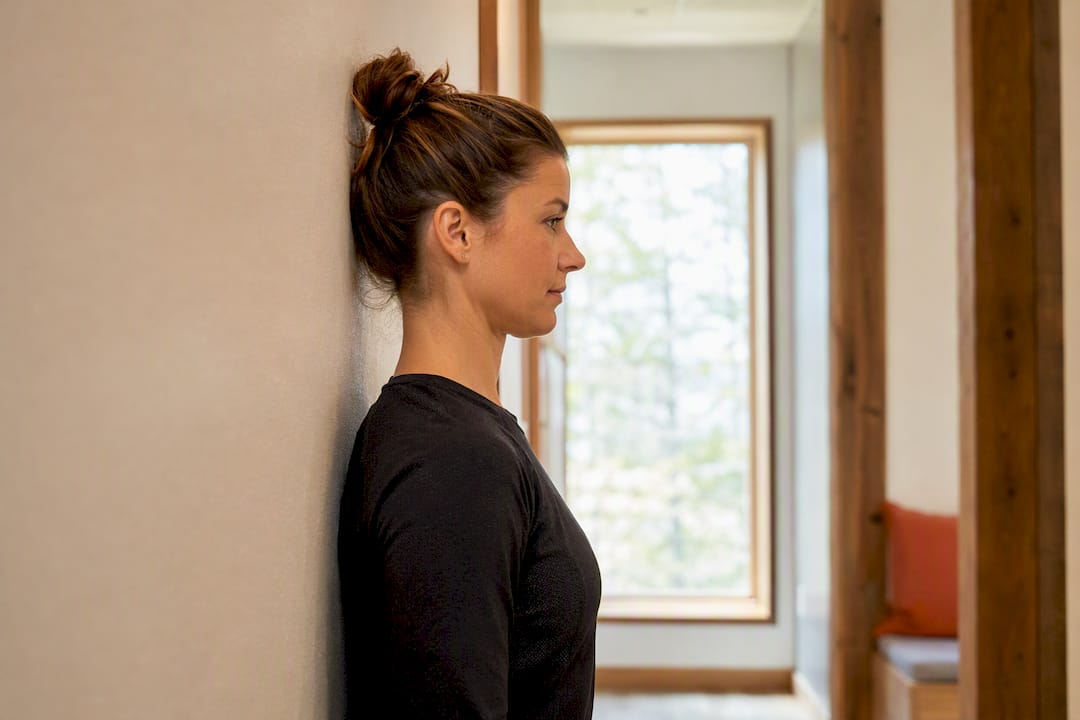
Pro Tip: Do chin tucks against a wall first. If your head can’t touch the wall without straining, that gap is your baseline. Track it. Watching that gap shrink over a few weeks is proof the work is paying off.
What Are the Best Thoracic Mobility Exercises?
The thoracic spine is where most adults are genuinely stiff, and it’s also the region most likely to get skipped because lumbar and cervical stretches feel more familiar. Fix thoracic rotation and extension first, and a surprising amount of “lower back tightness” eases on its own.
Extension moves:
Foam-roller thoracic extension. Lie with the roller placed horizontally under your shoulder blades, knees bent, hands supporting your head. Gently arch back over the roller, then curl forward. several slow reps. Foam-roller extension work reliably restores thoracic range when paired with a stable lumbar position, since the roller acts as a fulcrum that isolates the upper back instead of letting the low back arch to compensate.
Wall-supported extension. Standing with your upper back against a wall, reach both arms overhead while pressing your mid-back into the wall. several reps. A good regression if floor work feels awkward.
Rotation moves:
Thread the needle. From all fours, thread one arm under your body while rotating your gaze and chest toward the ceiling on the way back up. a few reps per side.
Quadruped thoracic rotation. Hand behind your head, elbow rotating toward the opposite hand then up toward the ceiling, hips staying still. Isolating this rotation matters because untrained rotation tends to leak load into the lower back, which is exactly the compensation pattern you tested for earlier.
Open book stretch. Lying on your side, knees bent and stacked, top arm sweeps open like a book toward the floor behind you. a few reps per side, holding briefly at the end range.
Lateral flexion:
Seated side bends, one hand sliding down the side of a chair leg, a few reps per side.
Beginners should stick to the wall and quadruped versions. Athletes and anyone training regularly can progress to loaded rotation drills, like a light landmine rotation, once the bodyweight versions feel controlled and pain-free.
Which Lumbar Mobility Moves Are Actually Safe?
Your lower back needs a different job than your thoracic spine: less rotation, more controlled flexion and extension, and a lot of stability work layered underneath. Treat lumbar mobility and lumbar strength as a package deal, not two separate projects.
Pelvic tilts. Lying on your back, knees bent, flatten your lower back into the floor by tightening your abdominals, then release into a slight arch. several slow reps. This is often the first exercise clinical self-care guidance recommends for lower back stiffness, and for good reason: it teaches control before it teaches range.
Knee-to-chest stretch. Pull one knee toward your chest, hold 20 to 30 seconds, switch sides. Repeat twice per leg. Gentle, passive, and well tolerated by most people with everyday stiffness.
Supported lumbar rotation. Lying on your back with knees bent and together, let your knees fall gently to one side within a pain-free range, hold a few seconds, return to center. Avoid this one if you have a diagnosed disc issue or it reproduces any pain running down a leg.
Bridging. Feet flat, lift your hips into a straight line from knees to shoulders, squeeze your glutes at the top. several reps. Builds the posterior chain strength that keeps your lower back from overworking during thoracic drills.
Pair these with two stability moves: bird-dog (extend opposite arm and leg from all fours while keeping your spine still) and dead bug (lying on your back, lower opposite arm and leg toward the floor while keeping your low back flat). Both train your core to resist unwanted motion rather than create it, which is precisely the skill that keeps rotation work in your thoracic spine instead of your lumbar spine. Skip loaded lumbar rotation entirely if you have a history of disc herniation, and regress any move that causes leg symptoms back to gentle pelvic tilts until you’ve been assessed.
What Does a Weekly Spinal Mobility Routine Look Like?
Consistency beats intensity here. A five-minute habit repeated daily outperforms one heroic 45-minute session on a Sunday, largely because spread-out mobility doses keep tissue from stiffening back up between workouts.
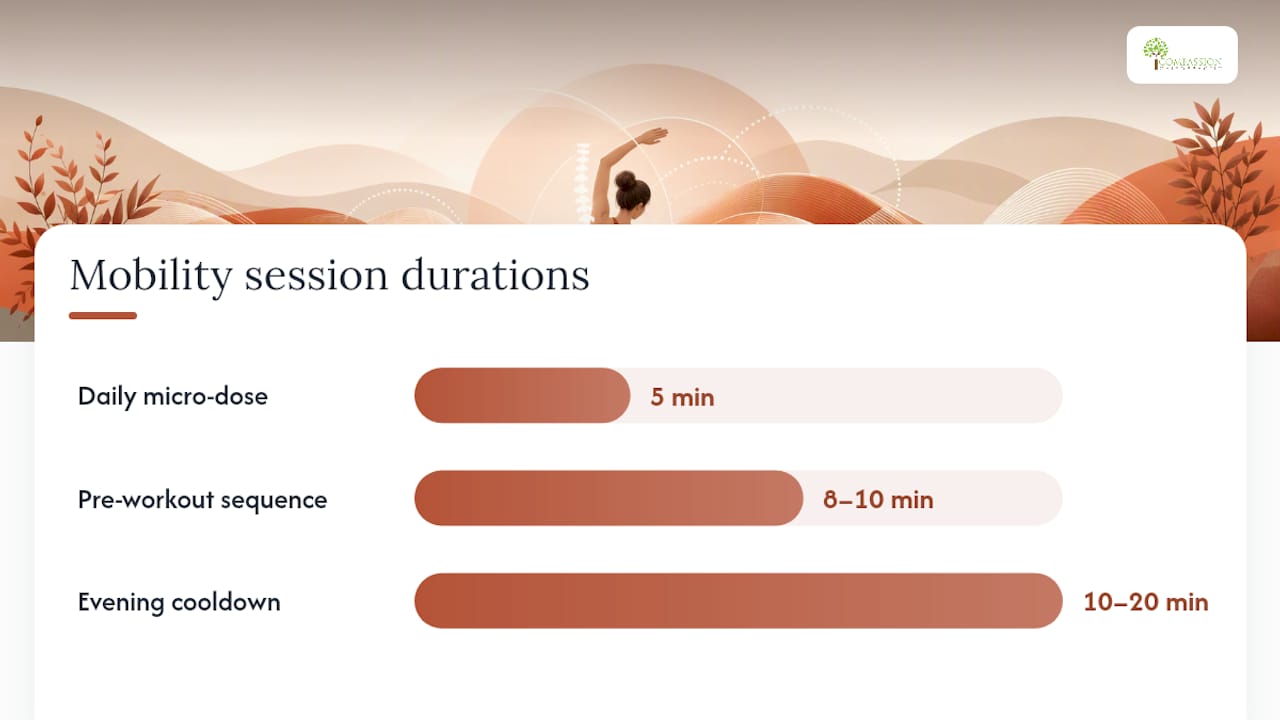
1. Daily micro-dose (5 minutes, anytime):
Chin tucks, several reps
Foam-roller thoracic extension, several reps
Pelvic tilts, several reps
2. Pre-workout dynamic sequence (8 to 10 minutes):
Head glides, several reps
Quadruped thoracic rotation, a few reps per side
Open book stretch, a few reps per side
Bridging, several reps
Bird-dog, several reps per side
This sequence favors active, moving drills over long static holds, since the goal before training is to wake the spine up, not sedate it.
3. Evening cooldown (10 to 20 minutes):
Knee-to-chest stretch, 30 seconds per side, twice
Thread the needle, 6 slow reps per side with a pause at the top
Wall-supported extension, several reps
Slow breathing throughout, exhaling on every stretch
Retest your seated rotation self-test every four to six weeks. If your hips are staying quieter while your shoulders turn farther, the program is working. If nothing has changed after six weeks of genuine consistency, that’s a good time to get an assessment rather than keep guessing.
When Should You See a Chiropractor Instead of Stretching at Home?
Home mobility work has real limits. See a clinician promptly if you notice numbness or tingling into an arm or leg, progressive weakness, or any loss of bowel or bladder control, that last one is an emergency, not a wait-and-see situation.
Peer-reviewed research on exercise for back pain supports movement-based therapy for many patients, but combining structured mobility with hands-on assessment tends to produce better outcomes for chronic or recurring stiffness than either approach alone.
A clinical evaluation typically includes:
A movement and posture assessment
Manual therapy or adjustments where appropriate
Rehab modalities suited to your specific restrictions
Bring your current routine to your first visit. It gives the clinician a clear starting point.
A Practitioner’s View on What Actually Moves the Needle
At Chirocompassion, the patients who improve fastest aren’t the ones who stretch hardest once a week, they’re the ones who do less, more often. Five honest minutes a day, done with the right cues, consistently outperforms an ambitious routine abandoned after ten days. We’ve watched this pattern hold across years of walk-in visits: mobility sticks when it’s small enough to survive a busy week.
The other pattern worth naming: people chase lumbar flexibility when their real problem is thoracic stiffness. Fix the upper back first. The lower back often calms down once it stops compensating for a joint above it that won’t rotate.
— James
Ready to Pair Home Exercises With Hands-On Care?
If your self-test keeps showing your hips doing the rotating instead of your ribs, or stiffness hasn’t budged after weeks of consistent work, that’s exactly where in-person assessment earns its place. Chirocompassion’s walk-in model means you don’t need to schedule weeks out to get a professional look at what’s actually restricting your spine, you can be seen and treated the same day you decide to act.

A chiropractic adjustment paired with your home routine addresses what stretching alone can’t reach: joint restrictions that need hands-on mobilization rather than repetition. The clinic also offers rehabilitation support through targeted stretching services for patients whose stiffness keeps returning despite consistent effort. Fee-for-service pricing includes a suggested donation option for anyone who can’t cover the full cost, because effective care shouldn’t depend on your budget. Book an evaluation online and bring your current routine with you, it gives us a real starting point for your first visit.
Sources
Recommended
Comments