
TENS vs EMS: 5 Clinician Cues That Decide Which to Use

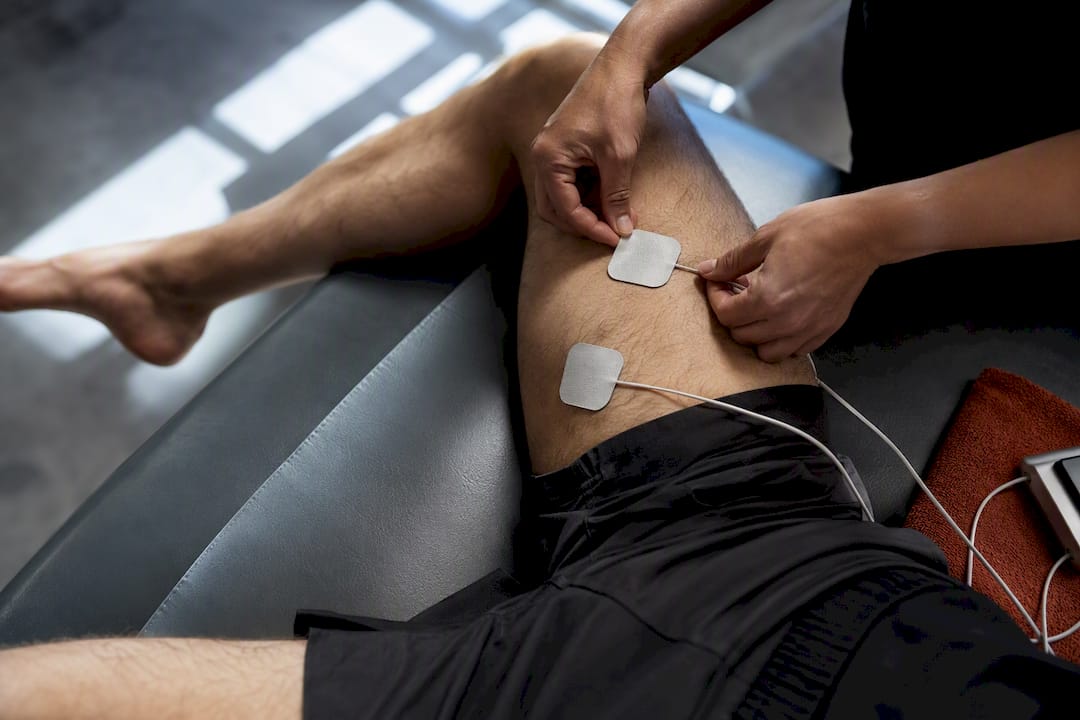
If pain is the problem, TENS is the tool. If weak, deconditioned, or slow-to-fire muscle is the problem, EMS (often called NMES) is the better fit. Both send electrical current through surface pads, but they’re built for different nerves and different jobs, and the right pick can change based on your health history and what a clinician sees during an exam.
TL;DR:
TENS mainly provides short-term pain relief by stimulating sensory nerves, with little evidence supporting long-term functional improvements.
EMS targets motor nerves to induce muscle contractions and is more effective for post-injury recovery, strength, and atrophy prevention when properly dosed.
Proper device selection requires checking output specifications, ensuring EMS can produce strong contractions, and consulting clinicians for correct protocol application.
Contraindications for both include pacemakers, pregnancy in certain areas, open wounds, infection, or blood clots, making medical clearance essential for safe use.
Combining TENS and EMS under clinical supervision enhances recovery outcomes and reduces the risk of ineffective or unsafe application at home.
Table of Contents
TENS vs EMS: The Core Difference You Need to Know
TENS stands for transcutaneous electrical nerve stimulation, and its whole job is calming pain signals. It works mainly through what’s called the gate control theory: the electrical pulses stimulate sensory nerves, which crowds out pain signals trying to reach your brain. Some settings also nudge your body to release its own natural opioids, which is why longer, lower-frequency sessions can feel different from short, buzzy ones.
You’ll typically find two main modes on a TENS unit:
High-frequency (conventional) TENS: fast pulses, a comfortable tingling sensation, fast-acting but shorter-lasting relief.
Low-frequency (acupuncture-like or AL-TENS): slower pulses, a stronger tapping sensation, tied more to the opioid-release effect.
TENS units are widely sold over the counter for everyday aches like lower back pain, arthritis flares, and muscle soreness. It’s worth being clear-eyed about what it does: TENS manages the symptom of pain in the moment. It doesn’t correct the underlying issue causing that pain, whether that’s a disc problem, joint restriction, or old injury.
What EMS (NMES) Does That TENS Doesn’t
EMS, clinically referred to as neuromuscular electrical stimulation (NMES), targets motor nerves instead of sensory ones. That’s the whole distinction in a nutshell: it recruits the nerves that control muscle fibers, forcing a visible, involuntary contraction rather than a tingle.
Clinical protocols usually call for pulse durations and intensities strong enough to produce a full, tetanic contraction rather than a weak twitch, since sub-threshold stimulation rarely builds strength or slows atrophy. You should feel your muscle actually pull and release, not just buzz.
EMS shows up most often in these situations:
Post-surgical recovery, especially after ACL reconstruction or knee replacement, when the muscle can’t fire normally yet.
Disuse atrophy from a cast, prolonged bed rest, or an inactive limb.
Muscle re-education, helping a muscle “remember” how to activate correctly after injury.
Because EMS asks more of the tissue, it’s more often applied under clinical guidance than TENS is.
Comparing TENS and EMS Side by Side
The clearest way to separate these two is by asking what each one is actually trying to accomplish in your body.
Primary purpose. TENS calms pain perception. EMS drives muscle contraction and rehab.
Target nerve. TENS works on sensory nerves. EMS works on motor nerves.
What you feel. TENS feels like tingling or light tapping with no movement. EMS produces a visible, controlled contraction you can watch happen.
Typical use case. TENS suits everyday flare-ups and chronic pain management. EMS suits structured rehab, post-op recovery, and strength maintenance.
Evidence strength. TENS has mixed results in long-term pain studies. EMS/NMES has firmer, condition-specific support in rehab settings.
A growing number of consumer devices combine both modes in one unit. That’s not inherently a problem, but device quality varies widely — some budget combo units simply can’t deliver the output intensity EMS needs to produce a real contraction, even though the TENS side works fine. If you’re buying a combo device, check that it lists separate, adequate output specs for each mode rather than one generic intensity dial.
Pro Tip: Not sure which mode you’re actually using? Watch, don’t just feel. If the muscle visibly contracts and releases, that’s EMS working. If you only feel tingling with no movement, that’s TENS.
Your decision usually comes down to this: pain without a rehab need points to TENS, muscle weakness or post-injury recovery points to EMS under guidance. If you have both, a clinician-managed plan (or a genuinely capable combo unit) covers more ground than guessing on your own.
Does the Research Actually Support These Devices?
Evidence for TENS in chronic pain has been inconsistent for decades. Older Cochrane-style reviews and more recent systematic analyses through 2025 both point to the same issue: trial quality is uneven, dosing is often underreported, and long-term functional improvement isn’t consistently shown across studies. That doesn’t mean TENS doesn’t work for you personally. It means the research can’t promise it will.
NMES tells a different story. In targeted rehab contexts, like preserving quadriceps strength after knee surgery or reducing atrophy during immobilization, the evidence is stronger and more condition-specific. Part of that gap comes down to dosing precision. A practical clinical rule for TENS is to run it “strong but comfortable,” not barely perceptible, and plenty of home users under dose without realizing it. For home use, treat TENS as a solid symptom-management tool with realistic expectations. For structured rehab, EMS earns its stronger evidence base, but only when the parameters are dosed correctly.
Safety Rules That Apply to Both Devices
Both TENS and EMS are considered safe for most people when used as labeled, but the contraindication list is largely shared and non-negotiable. Electrical stimulation carries specific risks that make certain situations off-limits regardless of which mode you’re using.
Avoid electrical stimulation entirely, or only use it with direct medical clearance, if any of these apply:
You have a pacemaker or implantable cardiac device.
Pads would sit over the heart, chest, or upper back near cardiac devices.
You’re pregnant and pads would go on the abdomen or lower back without OB clearance.
There’s an open wound, active infection, or signs of blood clot (thrombosis) at the pad site.
Mild skin irritation or redness under the pads is common and usually resolves. Stop immediately if you notice burning, sharp pain, dizziness, or a skin reaction that spreads. Always follow the labeling on your specific device, and bring up any chronic condition, like diabetes with nerve damage or a seizure disorder, with a clinician before starting either therapy.
How We Apply TENS and EMS in Clinical Practice
Choosing the right settings starts with the goal, not the device menu. Frequency, pulse width, and intensity all shift depending on whether we’re chasing pain relief or a functional contraction.
For pain control, we look for a comfortable, strong tingling sensation the patient can tolerate for the full session, not a barely-there pulse.
For muscle work, we look for a visible, controlled contraction strong enough to matter, following NMES parameter guidance built around specific rehab conditions like knee osteoarthritis or post-surgical recovery.
Electrode placement follows the same logic: near painful nerve pathways for TENS, directly over the target muscle belly for EMS.
Pro Tip: A quick way patients can self-check which effect they’re getting: tingling without movement means TENS is active; visible muscle pull means EMS is doing its job.
EMS protocols in particular benefit from supervision, since correct dosing and progression matter for real strength gains. Our electrotherapy sessions integrate with hands-on chiropractic adjustment and rehab exercise rather than standing alone. That combination is part of why structured knee rehab after injury tends to progress more predictably than a single tool used in isolation.
Your Quick-Start Plan for Choosing Between Them
If pain is your main complaint, start with TENS. If weakness, atrophy, or post-surgical recovery is the issue, EMS under professional guidance gets you further, faster.
Try TENS first for short-term, everyday pain relief you can manage at home.
Book a clinical evaluation before starting EMS for rehab, especially after surgery or injury.
If you need both, choose a genuinely capable combo device or let a clinician build a mixed protocol.
Before buying or booking anything, ask: What’s the actual output range on each mode? Is there a pacemaker, pregnancy, or wound concern? And is this pain management or true muscle rehab?
A Note From Our Care Team on Using Electrotherapy Responsibly
We treat electrotherapy as a supporting piece of care, never a stand-alone fix. We’ve seen TENS take the edge off a patient’s flare-up long enough for them to tolerate mobility work, and EMS help someone rebuild quad strength after months of favoring an injured knee. Every protocol gets built around the individual in front of us, and our walk-in model means you don’t need to wait weeks to start. If your situation is more layered than a simple pain-or-rehab question, our rehabilitation team can map out a plan specific to you.
— James
Try supervised electrotherapy at a chiropractic clinic
Buying a home unit means guessing at your own settings. Get TENS and EMS technology applied with clinical supervision, so the intensity, placement, and mode match your specific pain pattern or rehab needs.

A walk-in model means you can start electrotherapy without waiting weeks for a scheduled evaluation. An initial assessment includes reviewing your history, checking for contraindications such as cardiac devices or open wounds, and building a protocol tailored to your goals, whether pain relief or strength rebuilding. Our electrotherapy sessions integrate directly with manual adjustment and rehab work, so you’re not relying on one tool to do everything.
Ready to find out which approach fits your body? Book your visit online and we’ll take it from there.
This article is general information, not a substitute for advice from a qualified doctor. Consult a qualified healthcare professional about your own circumstances before acting on anything here.
Recommended
Comments